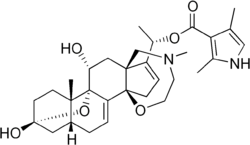
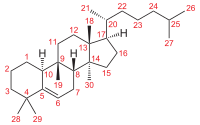
These are a toxin found in gourds and pumpkins, they have been bred out of most public sources but a family farm that uses their own seeds can still see some cases. The bitter taste also helps keep people from eating a whole lot of it. They are part of the plant's natural defenses against herbivores.
Tuesday, December 6, 2016
Be catious of your neighbors
In Germany a couple were given a gift of zucchini from their neighbors. They quickly made the batch into a stew to use the vegetable while it was fresh. The stew tasted bitter but nothing they couldn't handle and thought nothing of it. Later on they each got sick and went to the hospital after the husband's face had turned yellow. She was able to be treated but like all good husbands, he ate more and ended up dying. The culprit, cucurbitacins. http://www.thedailymeal.com/heidelberg-germany-zucchini-toxin-poison/82315
These are a toxin found in gourds and pumpkins, they have been bred out of most public sources but a family farm that uses their own seeds can still see some cases. The bitter taste also helps keep people from eating a whole lot of it. They are part of the plant's natural defenses against herbivores.
Opiods are poisoning our Youth
Researchers have gathered all the evidence and found that from 1997 to 2012 opiod hospitalizations from kids age 1-4 have risen by 205% while ages 15-19 rose by 151%. The difference between these numbers isn't a whole lot, but the reasoning is. Most of the kids ages 1-4 were accidental ingestion, while the older group took these drugs in an act of self harm. The fact that these numbers are going up could be due to the rise in use, in 2012 almost 259 million painkillers were prescribed
.
Some safety measures have been proposed like education and better child proof lids. Parents need to treat pills like dangerous drugs because in the wrong hand that is what they are. http://www.nytimes.com/2016/10/31/well/family/opioid-poisonings-rise-sharply-among-toddlers-and-teens.html?rref=collection%2Ftimestopic%2FPoisoning%20and%20Poisons&action=click&contentCollection=timestopics®ion=stream&module=stream_unit&version=latest&contentPlacement=1&pgtype=collection&_r=0
.
Some safety measures have been proposed like education and better child proof lids. Parents need to treat pills like dangerous drugs because in the wrong hand that is what they are. http://www.nytimes.com/2016/10/31/well/family/opioid-poisonings-rise-sharply-among-toddlers-and-teens.html?rref=collection%2Ftimestopic%2FPoisoning%20and%20Poisons&action=click&contentCollection=timestopics®ion=stream&module=stream_unit&version=latest&contentPlacement=1&pgtype=collection&_r=0
Bird Flu is Back!
The bird flu much like many other flu's have came and went across
America and never returned, until now. The H5N2 virus that killed
millions of poultry has been found for the first time in 14 months. http://www.foxnews.com/health/2016/08/26/devastating-bird-flu-strain-found-in-us-wild-duck-usda-says.html
This is a highly pathogenic strain which means it is very deadly to domesticated animals but wild animals can show little to no symptoms. Humans require very high contact with the infected birds to risk getting it and currently no humans have contracted this strain. It will be interesting to see this fall if the migration of these wild birds spreads the H5N2 and we have another large death among our food supply.
Blue Baby Syndrome and Nitrates
Recently there has been a lot of fuss in Iowa about water quality. There is even a lawsuit going on and I bet many of you don't even
know about it. Since we started using anhydrous ammonia as fertilizer
there have been many environmental implications. One of them is nitrogen
run off into our water supplies, mostly the rivers. These cannot be
filtered out that easily and when the concentration is high enough end
up in our drinking water. A common illness associated with nitrate
poisoning is called blue baby syndrome. This is an issue that concerns
pregnant women in Des Moines recently. Here is an article outlining the
current nitrate issue. http://www.desmoinesregister.com/story/money/agriculture/2016/09/29/elevated-nitrates-linked-cancers-birth-defects-environmental-group-says/91228894/
This syndrome occurs when hemoglobin Iron(Fe+2) is oxidized to methemoglobin(Fe+3) and it cannot transport oxygen to the rest of the body. This causes cyanosis and a pale blue color in the skin of infants. The relation between this and nitrate infected water has been known since the 1940s. The following is a scholarly article about how it affects babies. https://www.ncbi.nlm.nih.gov/pmc/articles/PMC1638204/pdf/envhper00308-0137.pdf
Sunday, December 4, 2016
Psilocybin: New use for a recreational hallucinogen
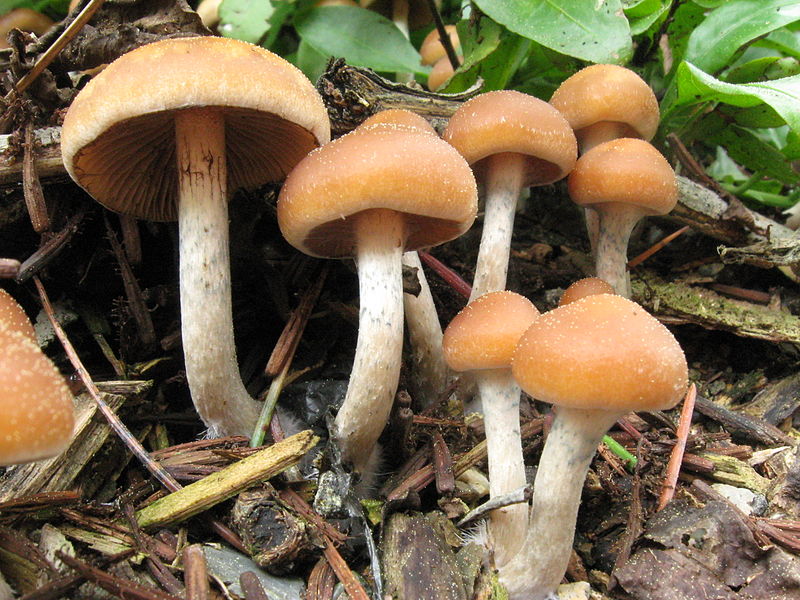
| Psilocybe cyanofriscosa |
Image created by Alan Rockefeller at Mushroom Observer
Hallucinogenic natural products and other substances used
for recreational purposes are often classified as Schedule 1 drugs. An
unintended consequence of this is that legitimate biomedical research
concerning such substances is curtailed, in large measure, due to real or
perceived legal, bureaucratic and societal pressures. Psilocybin, a natural product produced by mushrooms in the genus Psilocybe, is a case in
point. Eugenia Bone, in a 2014 New York Times article, refers to the
marginalization of research into the effects of this psychoactive drug as a
“cultural taboo” and notes that it has taken over four decades for the
pressures against the study of this drug to relax to a point where scientists
feel they can now examine its potential biomedical application.
Recent research by R. R. Griffiths and colleagues (2016) at Johns Hopkins University demonstrated that six months following treatment with psilocybin about 80% of participants (N=51), all of whom were cancer patients, showed "clinically significant decreases in depressed mood and anxiety".
When psilocybin is ingested it is metabolized to psilocin which is the pharmacologically active compound. In addition to causing transient hallucinations and moderately long term relief of anxiety and depression, initial physiological effects of psilocybin may include pupil dilation, changes in heart rate and blood pressure, nausea, tremor and alterations in coordination.
It is reasonable to suggest that much more information concerning psilocybin and psilocin would have been preformed had psilocybin not been classified as a Schedule 1 drug. Nevertheless, there is considerable information concerning the metabolism and action of these substances. Especially interesting is the substantial structural resemblance of psilocybin and psilocin to the natural neurotransmitter serotonin. Indeed many of the effects of psilocybin and psilocin are due to their interactions with serotonin receptors.
References
Bone, Eugenia (New York Times, Sunday Review Nov. 29, 2014)
Griffiths, R. R., M. W. Johnson, M. A. Carducci, A. Umbricht, W. A. Richards, B. D. Richards, M. P. Cosimano, and M. A. Klinedinst. "Psilocybin produces substantial and sustained decreases in depression and anxiety in patients with life-threatening cancer: A randomized double-blind trial." J Psychopharmacol 30 (2016).http://jop.sagepub.com/content/30/12/1181.abstract
Passie, T., Seifert, J., Schneider, U., & Emrich, H. M. (2002). The pharmacology of psilocybin. Addiction biology, 7(4), 357-364.
Quentin A-M. (1960). La Psilocybine en Psychiatrie Clinique et Experimentale [Psilocybin in Clinical and Experimental Psychiatry] (PhD thesis) (in French). Paris, France: Paris University Medical Dissertation.
Sunday, November 27, 2016
Vanishing Vermin or Festering Fowl?
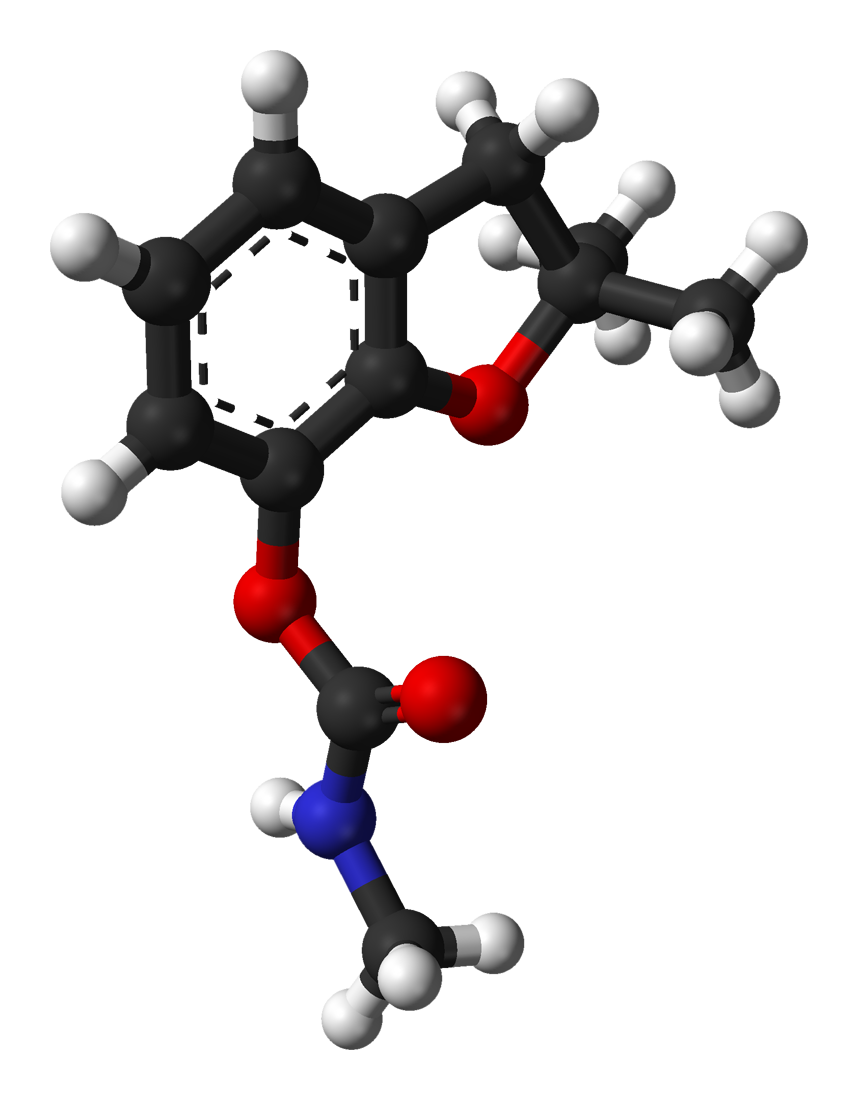
Image Credit: https://upload.wikimedia.org/wikipedia/commons/f/f8/Carbofuran-from-xtal-3D-balls.png
The environmental toxin carbofuran has been banned in the EU since 2001. It is thought to being illegally used to control mice and rats, so birds of prey are suffering secondary poisoning by consuming tainted rodents.
Carbofuran is an acetylcholinesterase inhibitor in the same class as the V series nerve agents. It is one of the most toxic pesticides, only surpassed by aldicarb and parathion.
Concerns over the impact on non-target organisms and children is what has led to the banning of carbofuran.
http://www.bbc.com/news/uk-northern-ireland-38084466
Saturday, November 19, 2016
Poison frogs may lead to new medications
![]() | ||||
| Phyllobates terribillis |
Congenital insensitivity to pain is caused by the same protein that this poison acts on, as well as other disorders like "man on fire" syndrome. The hope is that research on this poison will lead to effective treatments against these disorders and/or development of drugs that prevent pain, similar to how cone snail venom was used to develop ziconotide.
This article can be found in its entirety at http://www.npr.org/sections/health-shots/2016/11/17/502324984/chemists-recreate-deadly-frog-poison-in-the-lab
Photo credit: Tambako the Jaguar, Getty Images
Subscribe to:
Posts (Atom)